
Baa, Baa, Black Sheep
From the mouths of Nursery Rhymes. It's about taxes.

Baa, Baa, Black Sheep
Baa, baa, black sheep,
Have you any wool?
Yes sir, yes sir,
Three bags full.
One for the master,
One for the dame,
And one for the little boy
Who lives down the lane.
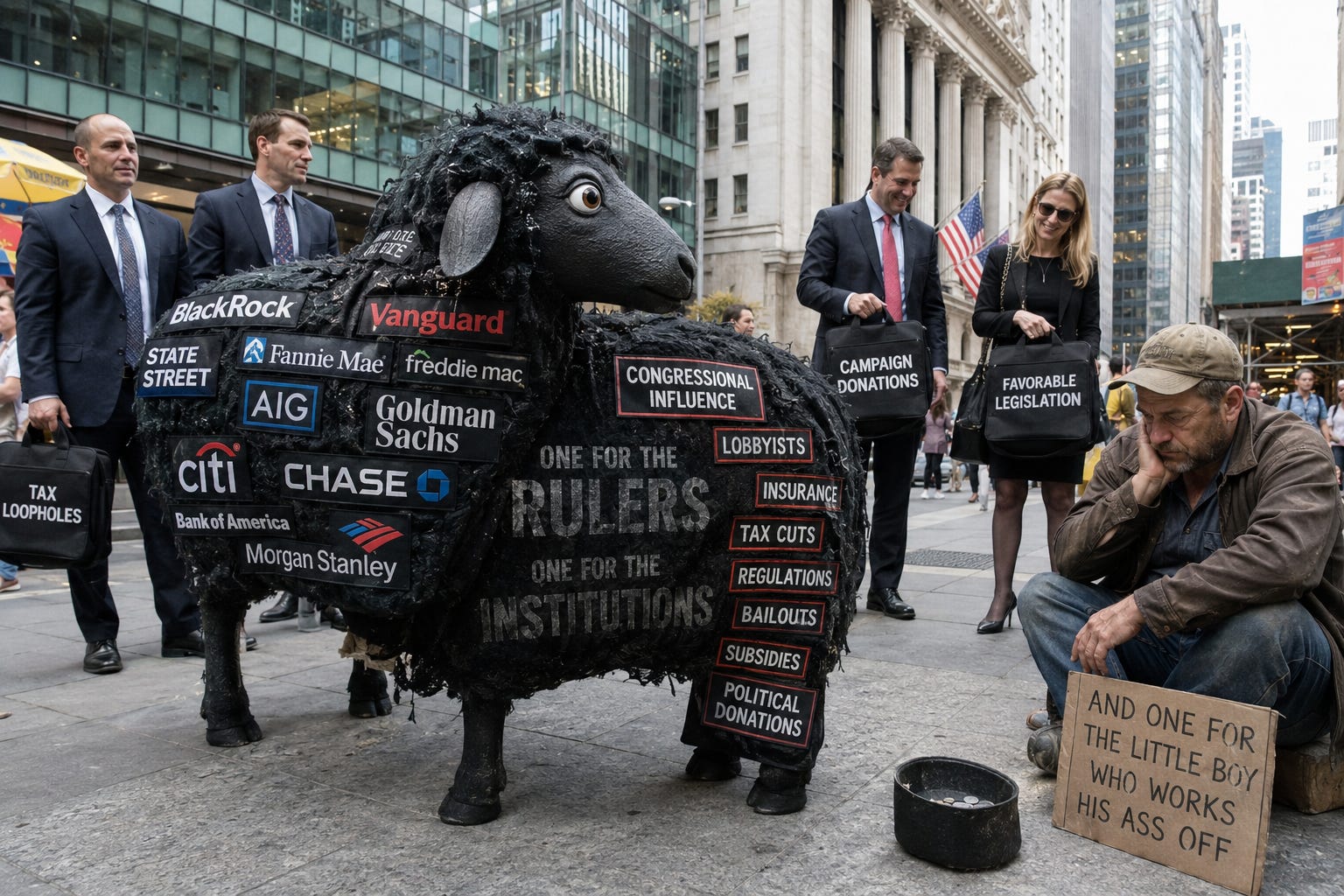
It turns out this wasn’t a nursery rhyme.
It was a tax return.
Most historians believe Baa, Baa, Black Sheep grew out of England’s medieval wool tax. The king got a third. The Church got a third. The poor slob who actually raised the sheep got what was left.
We’ve been teaching children about government extraction for centuries. We just put it to music.
And somehow nobody noticed.
What struck me wasn’t the tax itself. Every civilization has figured out a way to tax somebody. It was the order of things. Before the person who raised the sheep could enjoy the fruits of his labor, everyone else had already lined up with an empty bag.
Seven hundred years later, we’ve become much more sophisticated. We don’t call them kings anymore. We call them agencies, holding companies, investment funds, platforms, regulators, consultants, payment processors, and subscription services. The names have changed. The line of people holding out bags has only gotten longer.
Think about almost anything you buy today. Somewhere along the line, there’s a farmer, a machinist, a contractor, a truck driver, a software engineer, a writer, or a small business owner who actually created the value. By the time that product reaches you, an astonishing number of people have already taken their cut.
Everyone has a perfectly reasonable explanation. The regulator protected you. The consultant advised you. The platform connected you. The processor handled the payment. The investor supplied the capital. The lawyer reduced the risk. Individually, every explanation makes sense.
Collectively, they all want a bag of wool.
Meanwhile, the person who actually raised the sheep is standing there wondering why there’s so little left.
One detail makes me smile. Historians believe the sheep was black because black wool wasn’t as valuable. It couldn’t easily be dyed, so it sold for less. If that’s true, everyone wasn’t simply taking a share. They were taking a share from someone whose product was already worth less to begin with.
Some things never go out of style.
Today we don’t always reward the person who creates the most value. We often reward the person who positions themselves closest to the flow of money. There’s a difference. One person raises the sheep. Ten other people explain why they deserve a percentage of the wool.
We’ve gotten so used to that arrangement that it barely registers anymore. It’s simply the way things are.
Which brings me back to the nursery rhyme.
Children hear a sheep.
Adults should hear a system.
Because that’s what this little verse has always been about. Not sheep. Not wool. A system where those furthest from the work often benefit the most from it.
Maybe that’s why it has survived for centuries.
Or maybe it’s because every generation thinks the rhyme is about the last one.
Until one day you look around and realize you’re the sheep.
I think it’s time to stop the flow of things that are not in our best interest. We do have power. A lot actually. Uncovering our hidden costs of supporting an upper class that can’t exist without those left out is not going to happen unless we truly understand the flow of things.
So, this nursery rhyme piece is a reminder to figure out the genesis of where things come from and what our role is in supporting them.