
Father's Day Lesson for the Battleship Wisconsin

My two sisters and I fought a lot as children. I mean a lot. Eventually my father would intervene.
“Stop fighting,” he’d say.
One of us would inevitably protest.
“But she started it!”
And my father would simply say, “Well, I’m going to finish it.”
We were children. He wasn’t angry. He wasn’t trying to punish us. He was simply ending it.
He knew his own power. And, he knew we had none.
I was reminded of my father recently when I read a story from the Korean War.
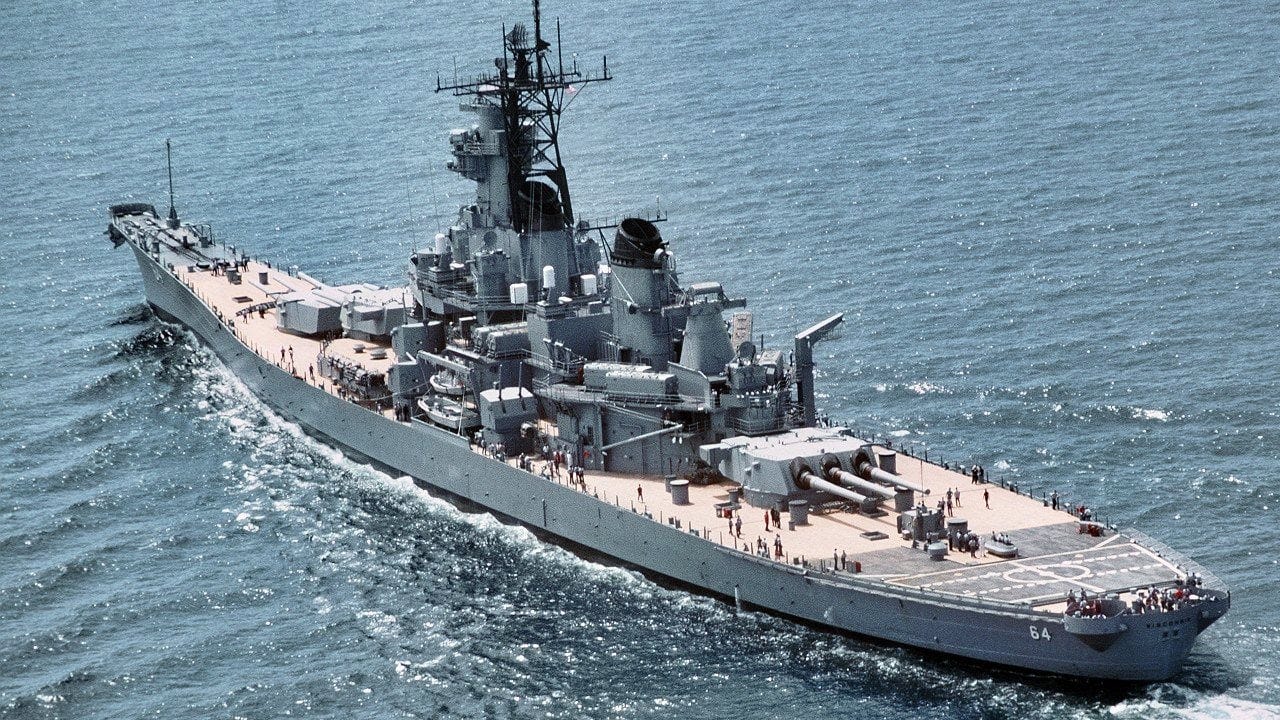
In 1952, the battleship USS Wisconsin was operating off the coast of North Korea when a North Korean artillery battery opened fire. One shell struck the ship, injuring three sailors and leaving what would become the only battle scar the Wisconsin ever received from enemy fire.
The Wisconsin did not take it well.
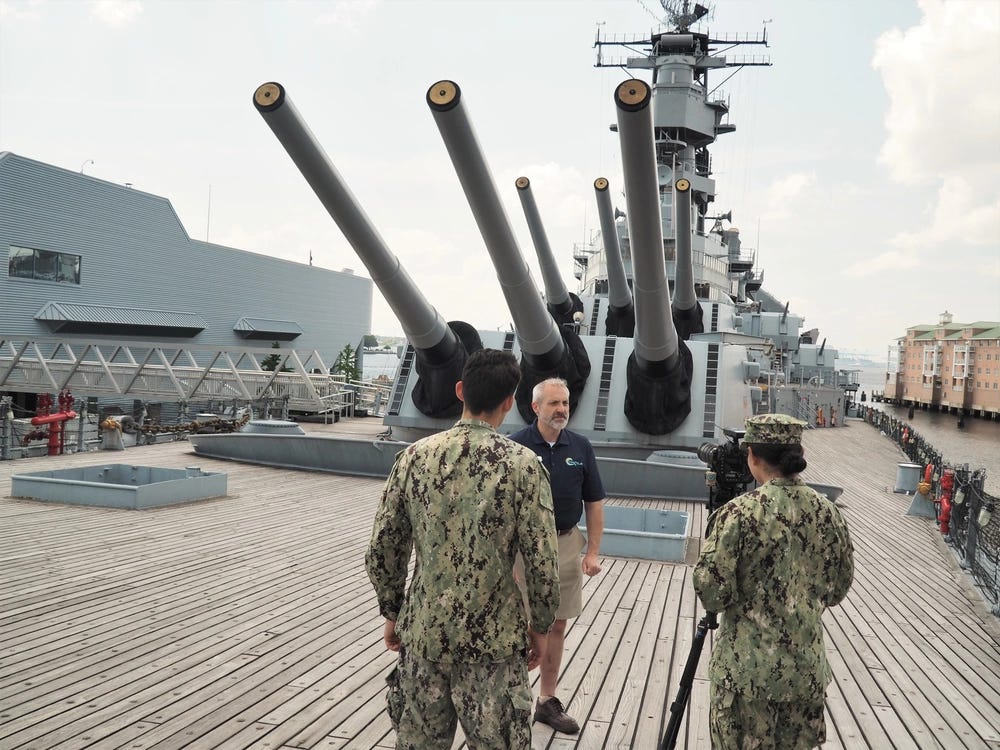
Within moments, all three of her massive turrets swung toward shore. Nine 16 inch guns. Each capable of firing a 2,700 pound shell roughly the size of a small car. The response was swift and overwhelming. The North Korean battery, along with quite a bit of surrounding landscape, ceased to be a military problem.
According to naval lore, the destroyer escorting the Wisconsin flashed a message by signal lamp:
“TEMPER TEMPER.”
The Wisconsin is said to have replied:
“But they started it.”
Historians believe the first message may well be true. The response, however, has never been documented. It may simply be one of those stories sailors polish over time because it’s too good not to tell.
But here’s the thing. Regardless of whether they said it or not, they acted it. It’s the reaction they had that created the response.
Or more precisely, the absence of contemplation before the reaction.
My father’s response to our fighting was measured. He did not react. He responded.
He knew exactly who had power in that house.
People who know they have power rarely need to demonstrate it.
Lately, our politics feels like the opposite.
This administration reacts before it contemplates. It lashes out before it reflects. There is no pause between provocation and response. Not even a short breath, let alone a deep one.
Whether on his ridiculous social media, or spending billions without including congress to attack Iran, there is no plan, not response that shows intelligence discipline and consideration.
And if we’re honest, after more than a decade of living with this style of politics, many of us have begun behaving the same way. Myself included.
We react instantly.
We rage instantly.
We post instantly.
As though power lies in immediacy.
But real power rarely behaves that way.
My father never sounded angry when he said, “I’m going to finish it.” He sounded certain. Because he knew his own power.
When you think you have no power, you behave in a reactionary way. You reach for it constantly. You display it. You perform it.
When you truly possess power, there is far less need to do that.
So perhaps the task before us is not simply to win arguments or defeat opponents.
Perhaps it is to stop behaving as though we have no power.
And Dad, thank you. I wish I had told you that before you were gone.
My sister was 13 years younger than me. So we never fought. Then and to this day.
T