

I posted last week in my column here, The Clintons Wrote the Epstein Playbook, and stated that the Clintons must testify. They have changed their decision and agreed to go in front of Congress and answer questions around their Jeffrey Epstein connection. I have never been a fan of either of them. The following is what coulda, shoulda, woulda… - Christine Merser
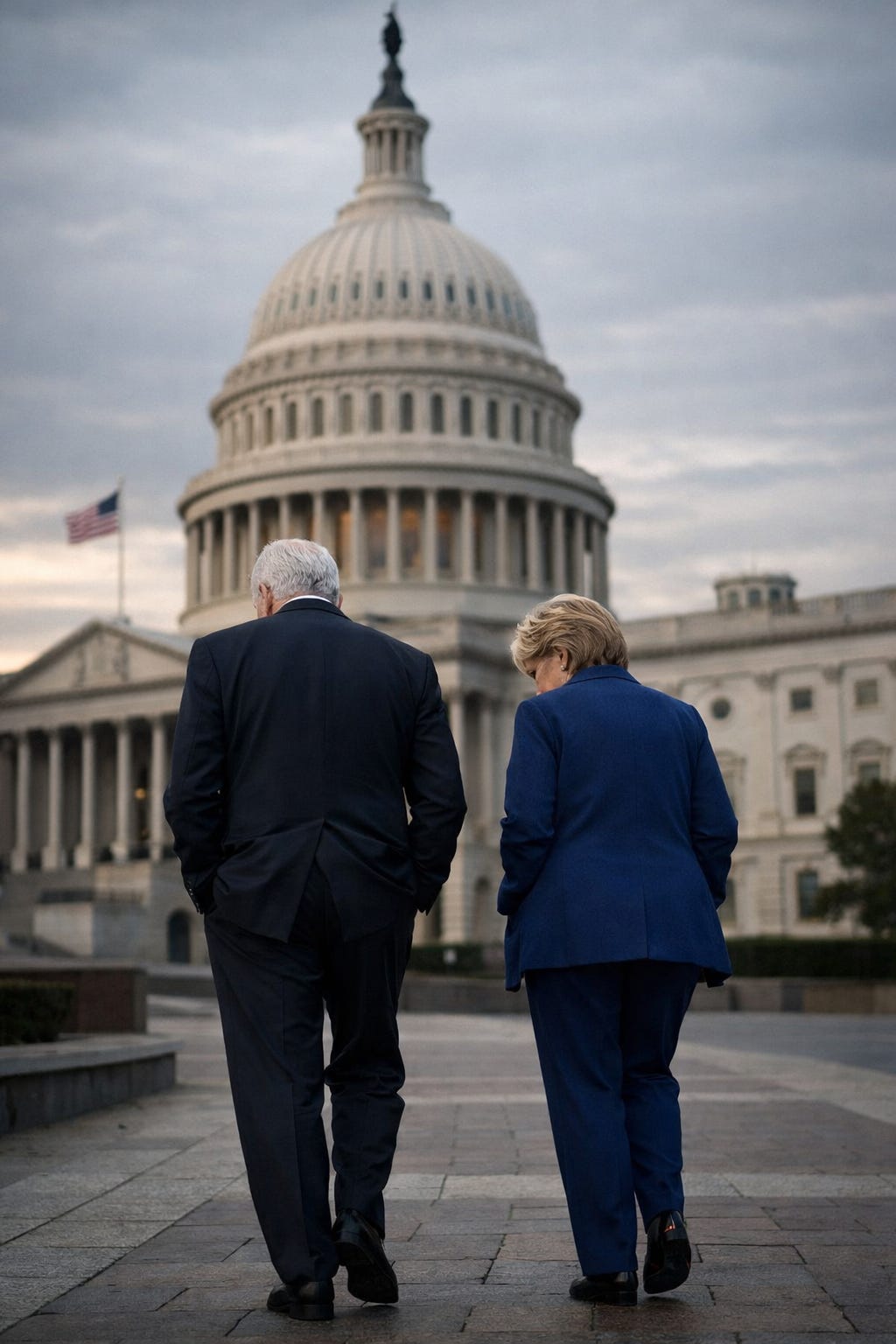
If Bill Clinton and Hillary Clinton were fundamentally different people, there is a version of testimony that could serve the country rather than themselves. It would not require confessions of crimes or reckless self-incrimination. It would require something rarer in American political life … an acceptance that proximity to power creates moral obligations beyond legal thresholds.
They could testify with clarity about judgment. They could acknowledge that access to figures like Epstein reflected a broader culture of elite immunity, one they benefited from and helped normalize. They could draw a line between what was legal and what was appropriate, and say plainly that the gap between those two things is where institutions rot. That kind of testimony would not be about facts alone. It would be about norms, responsibility, and the corrosive effects of unchecked power.
But that would require them to see testimony not as a risk to be managed, but as a civic act. And that has never been their posture.
What the Clintons Have Always Done Instead
Historically, the Clintons approach scrutiny the same way they approach politics … as a system to be navigated, controlled, and survived. They do not lie impulsively. They lie strategically. They tell the narrowest possible truth, lawyered within an inch of its life, while withholding the broader reality that people are actually trying to understand.
When confronted, they default to procedural mastery. They fragment narratives, defer to staff, retreat into technicalities, and wait out the moment until fatigue sets in. Nothing illegal happened. No rules were technically broken. Memory is suddenly unreliable. Context becomes a shield rather than an explanation.
This approach works because the system rewards it. It avoids jail. It avoids formal consequences. But it comes at a cost that the Clintons have always been willing to pay: public trust. Over time, that cost compounds. Each successful evasion teaches the political class that accountability is optional for those who are skilled enough to avoid it.
Why This Is the Real Argument for New Leadership
This is not ultimately an argument about the Clintons. It is an argument about who should hold power in this country.
People with the Clintons’ moral fiber will never choose what is best for the country when it conflicts with their own preservation. They will always err on the side of self-interest, control, and legacy protection. Not because they are uniquely corrupt, but because they are structurally incapable of surrendering advantage in service of the public good.
A functioning democracy requires leaders who see accountability as an obligation, not a threat. Who understand that there are moments when personal risk is the price of institutional repair. Who do not confuse legality with legitimacy.
The Clintons are incapable of that kind of leadership. And that is precisely why this moment matters. Not to punish them, not to extract spectacle, but to make clear that the future cannot be built by people whose first instinct, always, is to protect themselves.
That is the real testimony the country needs to hear.
What Needs to Happen Next, by We the People
Once testimony happens, our job is not to litigate it endlessly. We do not need another decade of parsing answers, defending intentions, or arguing over whether they were “technically honest enough.” That reflex is exactly what has kept us stuck.
The correct response is disengagement.
The Clinton Foundation should be abandoned by any reasonable people who still believe ethical clarity matters. Not because every act associated with it was corrupt, but because it represents a permanently blurred line between power, access, money, and moral exemption. That model has failed. It does not deserve our time, our donations, or our deference.
Our civic attention is finite. Continuing to center the Clintons as if they remain essential to the country’s moral or political life is a choice. And it is one we can stop making.
This is also where our standards must change. Who we elect cannot be based solely on résumé, intelligence, or political effectiveness. Moral fiber, demonstrated across an entire life, has to matter. If it ever had, Bill Clinton would never have become what he became. That is not revisionism. It is pattern recognition.
Private behavior is not separate from public leadership. How someone treats truth, boundaries, restraint, and responsibility in their personal life is how they will treat institutions when the stakes are higher and accountability is easier to avoid. Pretending otherwise has been one of our most damaging political illusions.
The point of Clinton testimony is not closure for them.
It is clarity for us.
We the people do not need their explanations anymore.
We need to withdraw consent, withdraw attention, and choose differently.
That is how eras actually end.