

“We are standing at a strange inflection point in late night television. What used to be entertainment has become a launch pad for how America processes itself. And the fact that comedians now feel harder to silence than institutions built for backbone should make every one of us pause.” - Christine Merser

Late night television was once the thing you left on when you were too tired to turn it off. It was comfort noise. A celebrity on the couch, a band in the corner, a few jokes about the news, and the fade to black. That is not what it is anymore. Somewhere between Trump descending the escalator and Stephen Colbert packing up his desk, late night became something else entirely. It became a content engine, the place where the narrative gets built before it is sliced into clips and shipped out into the bloodstream the next morning.
We are in the midst of the Trump era of intimidation, not just politically, but culturally. Institutions we used to think of as pillars of courage and power, universities, corporations, Congress, have shown us their limits. Columbia University, with its millions of alumni and its mythic sense of self, has twisted itself into knots trying to please donors, trustees, students, politicians, and the press. Corporations have sprinted toward big public values statements when it was easy, then quietly deleted, softened, or reversed them when the market or the mob pushed back. Congress has perfected the art of the hearing that leads nowhere. For an institution literally designed to check power, it has mostly chosen to survive it instead.
And then there are the people behind the late night desks.
It is not that they are morally braver than everyone else. It is that, after Colbert, they became harder to touch. Colbert pushed, the outrage machine revved, and instead of standing solidly behind him, his network flinched. He was, in many ways, left alone at the mall. Everyone saw what happened. The lesson for other shows was not to be quieter. The lesson was to make sure that if the knives came out, the audience would show up too.
Jimmy Kimmel did exactly that. When he spoke about health care, or about guns, or about the absurdity of what we now call normal, viewers rallied. They did not just watch. They defended him. They made noise. They made him expensive to get rid of. Networks and sponsors suddenly understood that this was not only about ratings at 11:35. It was about the circulation of those ten minute segments that define the next day’s conversation.
That is the real shift. Late night is no longer primarily a television show. It is a nightly launch pad for content that will live everywhere else. The monologue is written, delivered, and filmed in front of a studio audience. But the real audience arrives tomorrow. Producers cut the best seven minutes, add captions, and send it to YouTube, TikTok, Instagram, X, and everywhere our phones go. By midmorning, that one segment has become three headlines, fifteen reaction posts, one think piece, and a group text argument. The show is the factory floor. The clips are the product.
Once you see that, the power balance makes more sense. Universities are terrified of upsetting donors. Corporations are terrified of upsetting shareholders. Congress is terrified of upsetting its own base, which they think Trump owns. Late night, on the other hand, is terrified of becoming irrelevant. The only way to stay relevant in this landscape is to say something that feels true enough that people are willing to pass it along. Truth, even wrapped in jokes, travels. Carefully neutral statements do not.
Colbert moving to Netflix for a documentary series is part of this same story. He is not fading away into quiet retirement, he is changing platforms. He will talk about his career, his near misses, the pressures, the rivalries, the battles inside the industry that almost ended it. Whether this is his way back to a nightly show or a transition to another kind of presence is an open question. What matters for late night is that the role he played, the ground he broke, does not disappear when he walks out. The machine he helped define keeps running.
So the question is not whether late night television dies with him, it is where it goes next.
If the Trump era continues to generate chaos and threat, the demand for nightly sense making will remain high. People will want someone to come out, look them in the eye, and say, yes, this is as crazy as you think it is. Late night has become a sort of national debriefing session, a place where the absurdity can be named so that it does not swallow us whole.
But what if it quiets down. What if we have a president like Kamala Harris, who does not wake up every day and try to blow up the news cycle before breakfast. What happens to late night then. Does it lose its urgency. Or does it get to expand again into what it once was at its best, a mix of politics, culture, human behavior, technology, and the everyday ridiculousness of being alive right now.
My guess is that late night will not shrink as much as shift. The content engine is already bigger than the crisis that fed it. These shows have built infrastructures of writers, producers, and performers who understand how to turn a ten minute segment into a national conversation. That skill set is portable. It does not depend on Trump. It depends on having something sharp, human, and emotionally honest to say about whatever comes next.
Which brings me to the part that might make traditional political consultants nervous.
If late night has cracked the code on how to reach people where they actually live, on their phones, in their feeds, then maybe politicians should stop pretending that the old model still works. The stump speech in a hangar, the one big address every few weeks, the press conference where nothing is really answered, all of that feels increasingly out of step with how people take in information now.
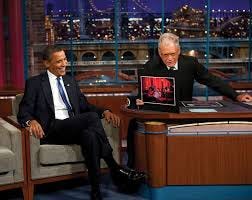
Perhaps the lesson from late night is simple. Give a speech every day that is ten minutes long. Make it real. Make it specific. Make it shaped enough that it can be clipped into two or three segments that travel on their own. Put it out there, not as a performance for a room of a few hundred, but as raw material for a country that will meet it in fragments. Let the snippets go out and make the mark.
And if the next person running for president is smart, they will not leave this to chance. They will bring in someone who understands timing, rhythm, and the way humor can lower defenses long enough for the truth to land. Someone who knows how to turn outrage into clarity without tipping into despair. Maybe they will call Stephen Colbert. Maybe they will let Jon Stewart sit at the edge of the table. Not to turn governing into a joke, but to borrow from the one corner of American culture that has figured out how to talk to people every night and still have them show up again tomorrow.
Because if late night has shown us anything in this strange season, it is that the power is no longer in the room where the show is taped. It is in what happens to those ten minutes once they leave the building. That is where late night is going. The only question is whether the people who want to lead the country will be smart enough to follow.