
This is Not Nazi Germany 2.0

I understand why we reach for Nazi Germany when trying to name what this administration represents. It feels like the strongest historical alarm we have. It’s the reference point we were taught to use when something has crossed every moral boundary and refuses to stop.
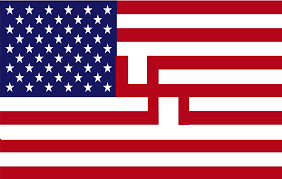
Nazi Germany was brutally hierarchical. Power moved downward. Orders came from the top and were enforced through fear, coercion, and violence. The structure was rigid. The lines of authority were visible. You could point to the center of power even as it expanded outward.
That is not what I’m watching now.
What gets lost when we invoke Nazi Germany is not just the early stages of compliance, though that matters. What gets lost is the structure itself. This moment is not defined by a few people at the top overpowering those beneath them. It is defined by participation moving laterally. By alignment rather than command. By networks, incentives, silence, and repetition.
I’ve spent a lot of time thinking about circles of collaboration in the best sense of the word, because I believe deeply in what people can build together when collaboration is grounded in trust, accountability, and shared purpose. What we are seeing now is something else entirely. It is collaboration without conscience. Coordination without responsibility. Alignment without moral agreement. It’s a circle of collaboration of evil, and I chose the word ‘evil’ after careful consideration.
This is not fascism imposed. It is fascism assembled.
Germany had to move country by country. Border by border. Occupation by occupation. What is happening now does not require tanks or invasions. It moves through markets, media, platforms, courts, contracts, and code. It spreads globally without declaring war because it doesn’t need to. Power no longer has to conquer territory when it can shape reality.
That difference matters.
I see it in how people participate. Not because they are forced, but because the system rewards them for doing so. Media figures amplify narratives because attention is currency. Corporations comply because the financial incentives are real. Platforms promote division because outrage performs better than truth. Individuals repeat talking points because belonging feels safer than dissent. No single actor controls the whole. Everyone controls their piece.
That is what makes it so hard to stop.
Plausible deniability thrives in this structure. Each person can say, I’m just doing my job. Each institution can say, this is policy. Each platform can say, this is the algorithm. Responsibility dissolves not because no one is responsible, but because responsibility is shared so widely it becomes invisible.
Global entanglement accelerates this beyond anything the 1930s could have imagined. Nazi Germany was geographically bound. Today’s systems are not. Money moves instantly. Disinformation is coordinated across borders. Authoritarian tactics are shared, refined, and exported. A billionaire in one country funds influence operations in another. A platform headquartered somewhere else shapes political life everywhere. Power does not live in one capital. It lives in networks.
And then there is scale and speed. This is not radio broadcasts or leaflets. It is personalized influence that knows what frightens us, what angers us, what keeps us engaged. Surveillance is ambient. Pressure is social. You do not need secret police when people monitor themselves and one another, when conformity is rewarded and dissent is exhausting.
This doesn’t shock the system. It drains it.
That’s why the Nazi comparison ultimately fails me. Not because what happened then was less horrific, but because it was visible and centralized. It required force. It announced itself. What we are facing now erodes rather than attacks. It hollows out truth, institutions, and shared reality until resistance becomes difficult not because it is forbidden, but because it is fragmented.
If Nazi Germany represents the horror of overt domination, this moment represents the horror of distributed capture. One expanded by conquering nations. The other expands by absorbing systems.
That distinction matters. Because if we keep looking for a single strongman or a single capital or a single breaking point, we will miss what is actually happening. This isn’t taking over one country at a time. It’s taking hold everywhere at once.
You’re horrifyingly right - brilliant observation. The “fight the Nazi”playbook doesn’t work in this scenario.
This observation is an import distinction in the Hitler/Trump analogy. Shared consciousness at its most evil.