
When Freedom Returns from Destruction by a Authoritarian, It Never Comes Back the Same. Orbán, Soros, and America’s Warning.

Yes, Orbán was voted out yesterday, but the damage done over the last sixteen years? Well, that’s another story, and I tell it alongside Orbán’s relationship to George Soros because as I watched that play out, I saw the destruction of so much more than what can be repaired by a new leader. And, we in my beloved country are on the same tract.
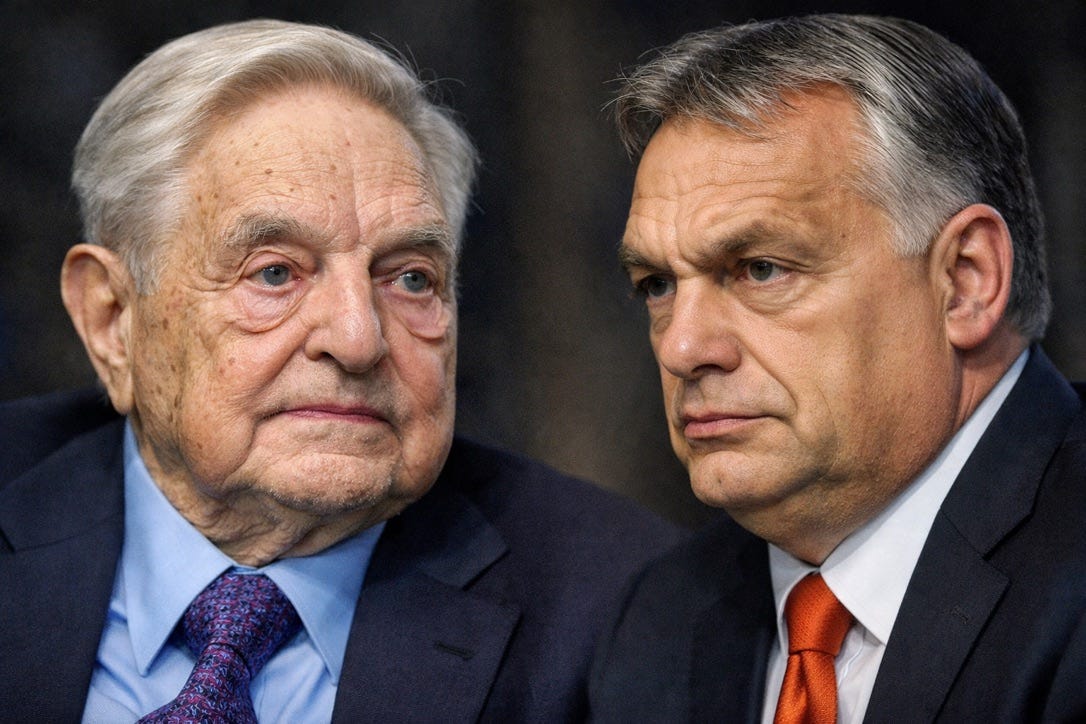
What makes the story of George Soros and Viktor Orbán so unsettling is not just the political betrayal. It is the historical inversion.
Soros was a Jewish child in Budapest when the Nazis occupied Hungary in 1944. He survived because his father secured false papers and placed him with a government official posing as his godson. Soros later said surviving fascism shaped his lifelong belief that closed societies begin by teaching people to fear one another.
After the war, Soros studied under Karl Popper at the London School of Economics. Popper’s idea of the open society became Soros’s governing philosophy. Once Soros made his fortune, he began funding scholarships, civil society groups, universities, and democratic institutions across Eastern Europe. In Hungary, he helped support a generation of young thinkers and reformers emerging from Communism.
One of them was Orbán.
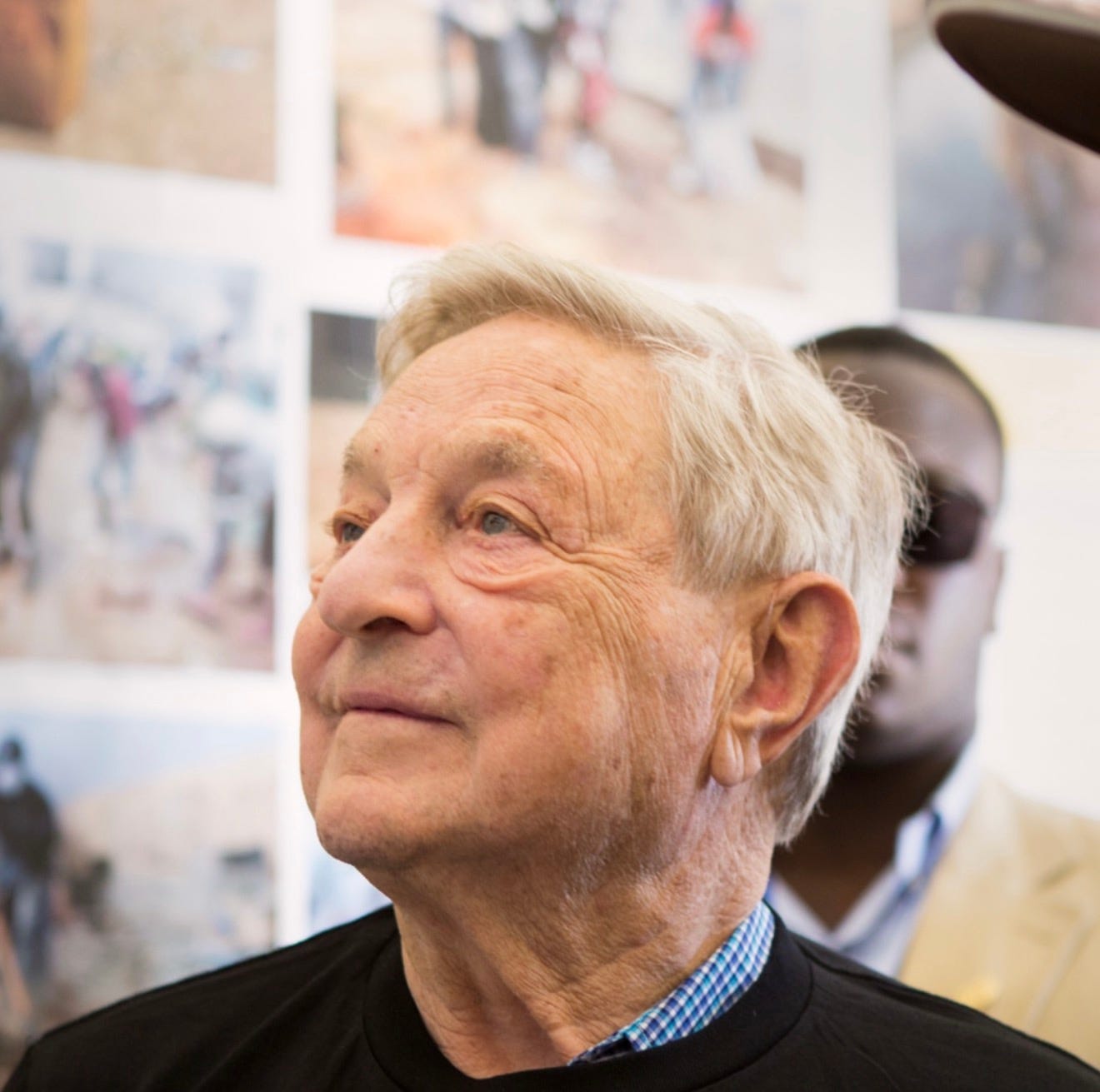
In 1989, Orbán received support from Soros’s Open Society Foundations to study in England. He was part of the young democratic class Soros believed could help build a freer Hungary. Soros over these past years, never played on that fact.
Years later, Orbán built his political machine in part by destroying the very values that helped launch him.
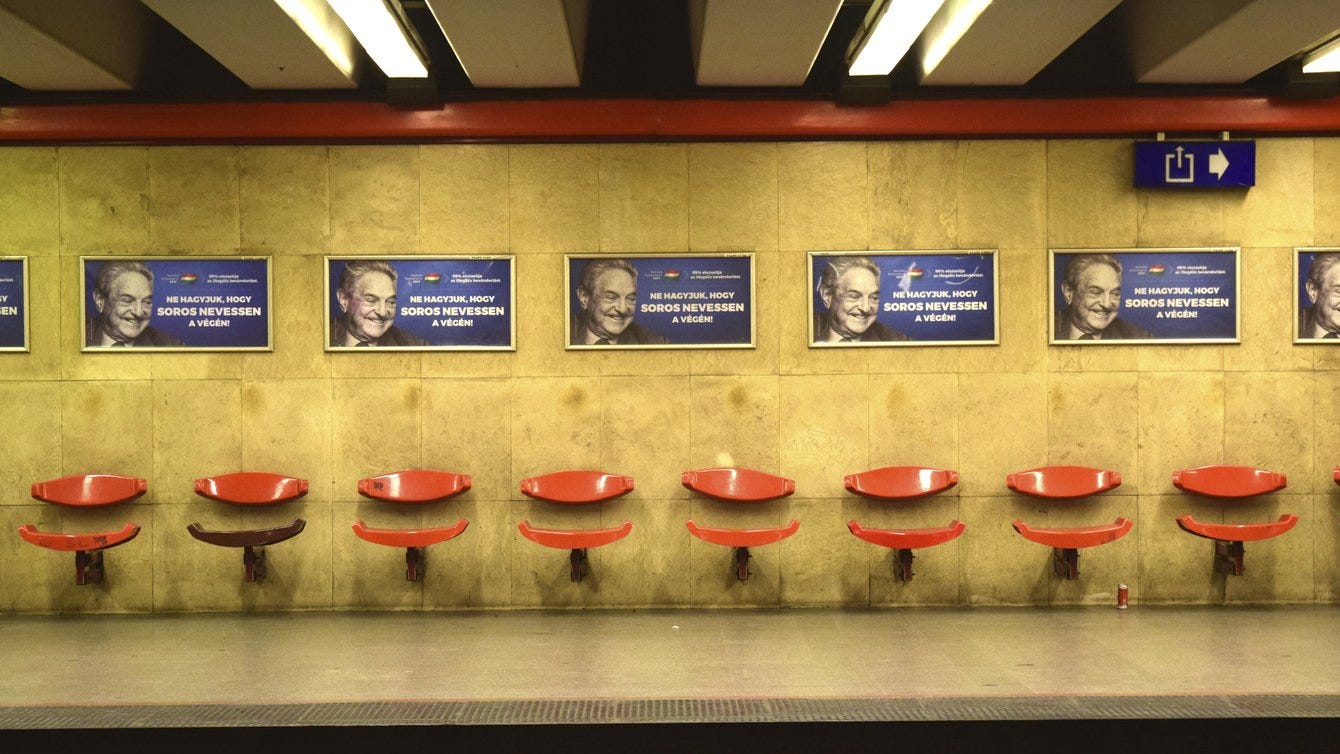
His government turned Soros into a national villain. Just like our government is doing. Billboards with Soros’s face and slogans warning that “Soros must not have the last laugh” spread across Hungary. Critics widely condemned the imagery as trafficking in old antisemitic tropes, including exaggerated features and coded messaging about shadowy Jewish influence. Soros became the symbol Orbán used to stoke fear of outsiders, immigrants, liberalism, and the West.

The attack was not symbolic. Orbán’s government forced the Central European University to move most of its programs out of Hungary. Civil society groups were harassed. Independent media shrank. Courts were weakened. Fear became policy.
Soros rarely responded directly. He seemed to understand something larger than personal betrayal. Authoritarianism always needs a scapegoat, and Jews have too often been first in line.
Now Orbán is gone. After 16 years in power, he has conceded defeat to Péter Magyar, whose Tisza Party won a sweeping parliamentary victory today. The result ends one of Europe’s most entrenched illiberal governments, at least formally.
But removing a man is not the same as restoring a country.
That is the lesson for Hungary, and it is the warning for the United States.
People talk about democracy as if it is a switch. One election goes badly, another goes well, and everything resets. It does not work that way. Institutions are not abstract. They are habits. They are trust. They are the invisible muscle memory of a society that has agreed, however imperfectly, to play by rules larger than grievance.
Once that is broken, it is never rebuilt in the same way.
You can restore courts, but not the years of faith lost in them. You can reopen universities, but not recover the professors who left, the students who scattered, or the ideas that never got to flourish. You can restart programs, but not restore the momentum of decades spent building expertise, continuity, and belief.
That is what people in America still do not fully understand. If a country spends years hollowing out agencies, intimidating institutions, politicizing justice, punishing dissent, and teaching people that facts are optional, the damage is not temporary simply because the authoritarians eventually lose.
The scaffolding may still be standing, but the load bearing beams are cracked.
Hungary is about to begin the long work of repair. It may recover some of what was lost. It may even surprise the world. But it will not be the Hungary that could have been had Orbán never taken power.
That is the part Americans should sit with now.
Democracy is not only about defeating the person doing the damage. It is about understanding the cost of every year that person is allowed to keep doing it.
An open society can come back. But it comes back altered, chastened, slower, more fragile, and carrying the memory of what it allowed. Germany still is recovering from the crimes of World War II. The question is never simply whether freedom returns. The question is what shape it is in when it does.
And by the way, the country of Hungary owes George Soros an apology.
Wow, this is so articulate and moving and I am so grateful for your writing , your clarity and also grateful for George Soros
The same as when you pull nails out of a board, the holes remain.